
Our Great High Priest
The Hebrews writer has declared Jesus Christ as the High Priest of “good things to come” (Heb. 9:11) by His substitutionary death on the Cross for our sins. In doing so, Jesus has eclipsed the Jews’ earth-bound Temple Sanctuary and  has proceeded into the heavenly sanctuary and the very presence of God (Heb. 8:1-2; 9:11-12). But as he closes this first section of his letter (1:1-10:18), the writer wants to summarize the great doctrinal themes of our salvation with a focus on the work of Christ on the Cross. Jesus died as our great all-sufficient sacrifice to become our Mediator for Redemption by virtue of all that He has accomplished. In Heb. 9:11, the text shifts to an emphasis on the greatness and uniqueness of Christ’s sacrifice — “But when Christ appeared as a high priest of the good things to come, He entered through the greater and more perfect tabernacle.” His sacrifice was distinct from the OT Temple sacrifices, and His sacrifice permanently satisfies the Father’s requirements Christ is our Mediator (Heb. 9:15) and His death was necessary in order for us to be forgiven and redeemed and be with Him eternally in God’s presence. There were “pictures” of the atoning work of God on behalf of man in the Old Testament Temple and sacrifices, but now Christ has come and delivered the final reality.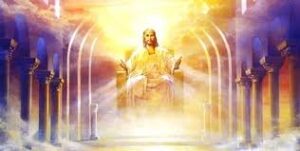
There is a separation of spiritual pictures and reality which the writer has been describing throughout the book of Hebrews. The Old Covenant with the Temple and its sacrifices provided a temporal, earth-based solution for forgiveness of sin. That solution was a picture that foretold the reality to come. The faithful Jewish believer obeyed God and offered a sacrifice, and that provided him the comfort of knowing God forgave his sin based on the sacrifices, which needed to be repeated for life in order to be effective. With Christ’s finished work on the Cross, His resurrection leading to His ascending into heaven and into God’s presence, we now have the reality of His once-for-all, eternally lasting sacrifice for our sin debt. The OT practices were actually an inspired picture of the sacrifice that the Messiah would finally offer in the New Covenant. Now, instead of a foretelling word picture of what God requires of His penitent follower, there is the reality of what Christ has done. Christ now ministers as our Great High Priest in the heavenly reality of God’s presence. Consideration in Hebrews 9-10 now moves to the true heavenly sanctuary, the Holy of Holies of God’s presence, where Jesus has “sat down” at the right hand of God (Heb. 1:3; 1 Pet. 3:22).
 Pace yourself: This study session concludes the strategic first portion of Hebrews (1:1-10:18) so you may want to take a couple of weeks to work through this important material. Click here to review the outline chart for Hebrews in order to recall what has been covered in these major doctrinal passages.
Key Words for Our Salvation
As we approach these concluding verses of doctrinal truth about the work of Christ to bring us salvation, it is appropriate to pause and be sure we understand the scope and depth of what He accomplished and not neglect any aspect of our “So Great a Salvation” (Heb. 2:3). The work of God for our eternal salvation encompasses many strategic doctrinal truths, all of which are esdsential for God’s great salvation to be complete and eternally effective. Following are some of the key doctrines upon which we rest our faith. From the moment we place our faith in Christ as our Savior, we spend the rest of our earthly life developing our understanding and application of these truths.
- Mediator – Christ “stood in” for us, He took our place on the Cross to bear the punishment for our sin before the Father in order to establish our peace with God. Rom. 5:1-2,10-12
- Vicarious – This refers to one person experiencing something instead of, or on behalf another. Christ became our Substitute, He took on the guilt for our sin, He bore the burden of our sin. As a result, He suffered separation from God, the penalty of our spiritual punishment. 2 Cor. 5:21; 1 Pet. 2:24; 3:18
- Atonement – The ransom is paid, the sinful slave is set free and our relationship with our holy God is restored, we are once again “one with God”. Heb. 9:22; Lev. 17:11
- Expiation – Based on God’s acceptance of satisfactory propitiation, the ugly blemish of sin in our soul is cleansed away, we have become “just as if” we had never sinned. We are literally “made favorable” to God as a result of expiation. The demand of God’s holiness is satisfied, His opinion is changed and we are no longer enemies, we are back in fellowship with Him. Rom 3:25; 1 Jn 2:2; 4:10; Rom. 5:1,9; 6:11-14; Gal. 4:4-5
- Propitiation – The object of expiation is our sin – the object of propitiation is God. God has been violated by our sin, His wrath has been directed on our sin, but now there is appeasement, we are “made favorable” because God is satisfied that justice has been served for our offense,we are no longer enemies. Christ’s blood, having been placed on the Mercy Seat in the heavenly Sanctuary, is deemed to completely satisfy God’s righteousness. Then based on our faith in Christ’s work on the Cross, Christ’s work
 of propitiation has been applied to our account. Rom. 3:25; 5:1; Heb. 2:17; 9:5; 1 Jn. 4:10
 - Redemption – We were a slave on the auction block and God paid the price for our freedom from sin and bought us back for His own. Rom. 6:5-7, 17-18; 1 Cor 6:20; Gal. 3:13
- Justification – We who have been completely given over to unrighteousness (Rom. 1:18-32) are now pardoned declared righteous by the One True Judge Who is holy and righteous and empowered to make that declaration. This is a judicial declaration by the supreme God, the only One who can declare the impossible – we who are guilty have our “slate” of sin wiped completely clean based on the shed blood of Christ on the Cross. Rom. 4:7; 5:1-9; Gal. 4:4-5
- Forgiveness – While propitiation is directed towards God, forgiveness is given to the believer. Based on our faith in Christ’s salvation work, God has cancelled our debt of sin, it is in effect a “legal act” as the Righteous Judge has “sent away” our sin as far as East is to West. Not only are we forgiven, we are also welcomed back into His cherished fellowship. Psa. 103:12; Eph. 1:7; Col. 2:13.
- Reconciliation – The result of mediation. Our sin made us enemies of God, but God accomplished our being brought back into His fellowship and now we have peace with God – Rom. 5:10-11. The barrier of sin has been removed, God’s wrath has been removed, and we are welcomed back into the communion, unlimited blessing and fellowship of God. Gal 3:13; Eph 1:7;2:16; 2 Cor. 5:18-19; Col. 1:21-22; 2:14; 1 Pet 1:18-19.
A Complete and Final Salvation
The difference between the Old & New Covenants
- The Old Covenant was the Anticipation of a completed Salvation
- It was temporary, with repeated sacrifices shedding the blood of animals
- Sin was covered temporarily and repeatedly, only for Israel and only for individuals
- The priest came out of the Holy of Holies to bless the people but they couldn’t go into God’s presence
- The New Covenant provided Realization of Salvation
- One final sacrifice by Jesus’ own shed blood
- This act “put away” sin “once for all”
- It is for all of sinful humanity
- Christ entered the heavenly tabernacle and sat down at God’s right hand
- By being in Christ, we are privileged to approach God’s throne
- Christ will come back to take His people to live in God’s presence eternally
God has provided His Completed Salvation
- Hebrews 9:11-28 reviews three ways God has made our salvation complete:
- 9:11-20, Jesus Christ provided a thorough cleansing
- 9:21-23, Jesus’ shed blood provided us with a once-for-all sacrifice
- 9:23-28, Jesus has accomplished a complete salvation (Jn. 19:30)
- Note in Heb. 10:1, the writer comments that the OT faithful believer, who brings his sacrifice to the Temple continually every year, and although he “draws near” to the holy temple of God, yet he cannot claim to be “made perfect”. The NT believer is made perfect.
- Heb. 7:19 declares that the law made nothing perfect, just emphasized falling short – the love of God is completed in the person who keeps God’s word and are in Christ (“made perfect”, 1 Jn. 2:5; 4:12, 17). Hebrews makes us of this term “perfect” at least 10x.
The Heart of the Matter
Hebrews 10:1-18 concludes the major thrust of the book which began at Heb. 7:11-19. Refer back to the Hebrews Outline Chart to see how this section fills the center of the book. Use these “stepping stones” to guide you through these next substantial passages about our Great Salvation.
Jesus Christ is our Superior, Great High Priest
- Ch. 7, Jesus Christ is a priest from His lineage back to Melchizadek, not Aaron.
- Ch. 8-9, Jesus now has a “more excellent ministry” (8:6) – A single, final, personal sacrifice for sin. We now have the “free gift” of justification (Rom. 5:15-17).
Heb. 10:1-18, The achievement of eternal salvation
- Superior and so much more
- 8:5; 9:23-24
- The Law couldn’t make the worshipper perfect – Moses had to remove his shoes
- The “good things” of full salvation – 9:11
- Make “perfect” – the Old Covenant couldn’t offer that
Heb. 10:2-4, Impossible?
- Justification gives us a cleared conscience. God “takes away” our sin: it’s gone forever – Compare Heb. 9:9; 10:22; 13:18.
- This seems to be leading us to the practical aspects of our superior salvation in the New Covenant, which will be elaborated in Heb. 12-13.
- A “reminder” – before Christ, there was always the nagging awareness of sin’s burden
- Now, sin is forgotten, removed, as far as the east is from the west
- Impossible? – With God, all things are possible!
- Gal. 3:24; 1 Pet. 1:10 – The Law leads us to Christ and salvation; we now possess the salvation foretold by the prophets.
- Without God doing the impossible, I am confronted with just how bad I really am.
- “There is only one way, one place, in one person, where the fear of death is relieved, and that is knowing that my guilt has been borne by my great Savior, my High Priest.” (Alistair Begg)
Heb. 10:5-10, Wise Words from David
- The Hebrews writer delighted in quoting from the Old Testament – here he is quoting Psalm 40:6-8.
- A sincere heart
- Psa. 51:17; Isa. 1:11; Jer. 6:20; Hosea 6:6; Amos 5:21-25
- V6 – this is actually a quote of a Hebrew idiom from the LXX translation
- You (God the Father) gave me (God the Son) a body in order to provide complete redemption through death (see Phil. 2)
Holy to the Lord
- By our faith in Christ for salvation, we are “sanctified forever”. This is a close equivalent to where the book of Romans says “justified freely” (KJV).
- Hebrews sees sanctification as positional, not in its progressive aspect
- It is Positional – 1 Thess. 4:3; Eph. 4:24; 1 Thess. 3:13
- Made holy – perfected for guilt-free service to God – 10:10, 29
- Also see Exo. 28:36; Zech. 14:20
“Do not go on presenting the members of your body to sin as instruments of unrighteousness; but present yourselves to God as those alive from the dead, and your members as instruments of righteousness to God. – Romans 6:13
The Old Testament High Priest had an elaborate set of garments to where to carry out 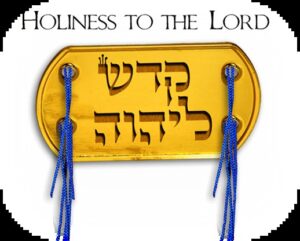 the activities of his office. On his turban was a very small but distinct gold plaque that had the phrase “Holy to the Lord” inscribed in Hebrew. This man was completely dedicated, given over to serving the Lord God in His holy presence. He was still a sinful man, but God’s declared method of approaching Him was through this man (Exodus 28:36-38).
Today we wear this label on our spiritual heart. We stand in Christ, declared to be holy, dedicated by the work of His Holy Spirit to walk as priests and in completed holiness, never to be stained by sin. Romans 6:1-13 provides an excellent summary of our standing before God in Christ and His holiness. Paul expresses our baptism in Christ to naturally result in our being “instruments of righteousness.”
How well do we minister as “instruments of righteousness”? Do we live our life as if we had a label on our forehead that announces that we are “holy to the Lord”? Do we demonstrate a life that is completely dedicated to expressing God’s pure holiness?
Hebrews and Romans
If we step back for a moment to observe the books of the New Testament library, Romans and Hebrews strike a significant stature in their importance to guide our Christian faith and life. Romans gives the full doctrinal treatise on our “Justification by Faith”. It is the essential foundation on how we establish our faith in the work of Christ on the Cross, and then live in the power of the Holy Spirit to demontrate our new life in Christ. Hebrews elaborates on our “Faithfulness to our Faith”.
Hebrews moves us up to a stratospheric view of the great work that God has accomplished by delivering His great work of Salvation through His Son Jesus Christ. Having first been promised in the Garden, then pictured in the patterns of the Tabernacle Sacrifices and finally brought to reality in the First Coming of the Messiah, we now have our Great High Priest, the Lord Jesus Christ, seated in the heavenly sanctuary at the right hand of the Father. Our salvation is sure, and Christ exercises His priestly ministry on our behalf as we walk in a life of faith.
10:15-18, A Final Word on the Final Word
The writer concludes his interpretation of Psa. 40:6-8 begun in Heb. 10:5-10 by adding thoughts from Jer. 31:31-34 (compare Heb. 8:8-12). This is a great climax for the book’s argument and hope. Final forgiveness means the end of partially effective sacrifices. The major section of Hebrews on the High Priest ministry of Jesus Christ ends here. Believers would be foolish to abandon such a superior salvation to fall back into man-centered works. “Let us” now go on in faithfulness to our Savior! The writer points us to Psalm 40 and gives us three distinguishable facets of one indistinguishable reality: Our standing before God is accomplished by something entirely outside of yourself (Psa. 40:10-11). Christ alone is our Great High Priest.
 Bible Study Journal
- Take the time to write out Psa. 40:6-8, Jer. 31:31-34, and Heb. 8:8-12. Then make some notes on how these texts are related to Heb. 10:5-12
- From Heb. 9:22, what is the underlying principle which God has declared to be true for sin to be purged, washed away, forgiven? See Rom. 5:9; Ephesians 1:7; 1 Peter 1:18-19; 1 John 1:7.
- According to Heb. 10:1-2, why have the OT sacrifices been discontinued?
- Comparing Heb. 10:1-4 to 9:16-28, do you think ch.10 is a new line of argument by the writer, or a continuation of ch. 9? What key words are clues?
- In Heb. 10:9-10, whose will is being obeyed – by whom? Who does the sanctifying?
- Extra Credit for Meditation…
Consider the rich ministry which Jesus Christ, our Great High Priest, performs for each of us:
-
- He makes atonement for sin (Heb. 2:17; 7:27; 9:14)
- He gives strength for those tempted by sin (Heb. 2:18)
- He gives grace in time of need (Heb. 4:15-16)
- He brings eternal life (Heb. 5:9-10)
- He saves forever and intercedes on believers’ behalf (Heb. 7:25; 9:24)
- He gives confidence to approach, draw near to our holy God (Heb. 10:19-22)
- He has sprinkled our hearts clean from an evil conscience and our bodies washed with pure water (Heb.10:22)

–